
Where British Fashion Meets Reinvention LFW Spring 27
Not long after New York Fashion Week, London took its place as the second stop on the Fashion Month calendar, bringing its particular mix of experimentation, heritage and emerging talent to Spring/Summer 2027. Held September 17–21 under the British Fashion Council, this season's official programme included 47 catwalk shows, 23 presentations, 10 digital activations and 53 evening events. The BFC also reported a 19% year-on-year increase in accredited buyer attendance, with international buyer attendance up 41%.
What made London particularly interesting this season was the range of voices sharing the same stage. Alongside established British houses and independent designers were major retail and commercial players, creating a Fashion Week that felt as much about the evolution of the British fashion business as it was about the clothes themselves.
Heritage, Reinterpreted
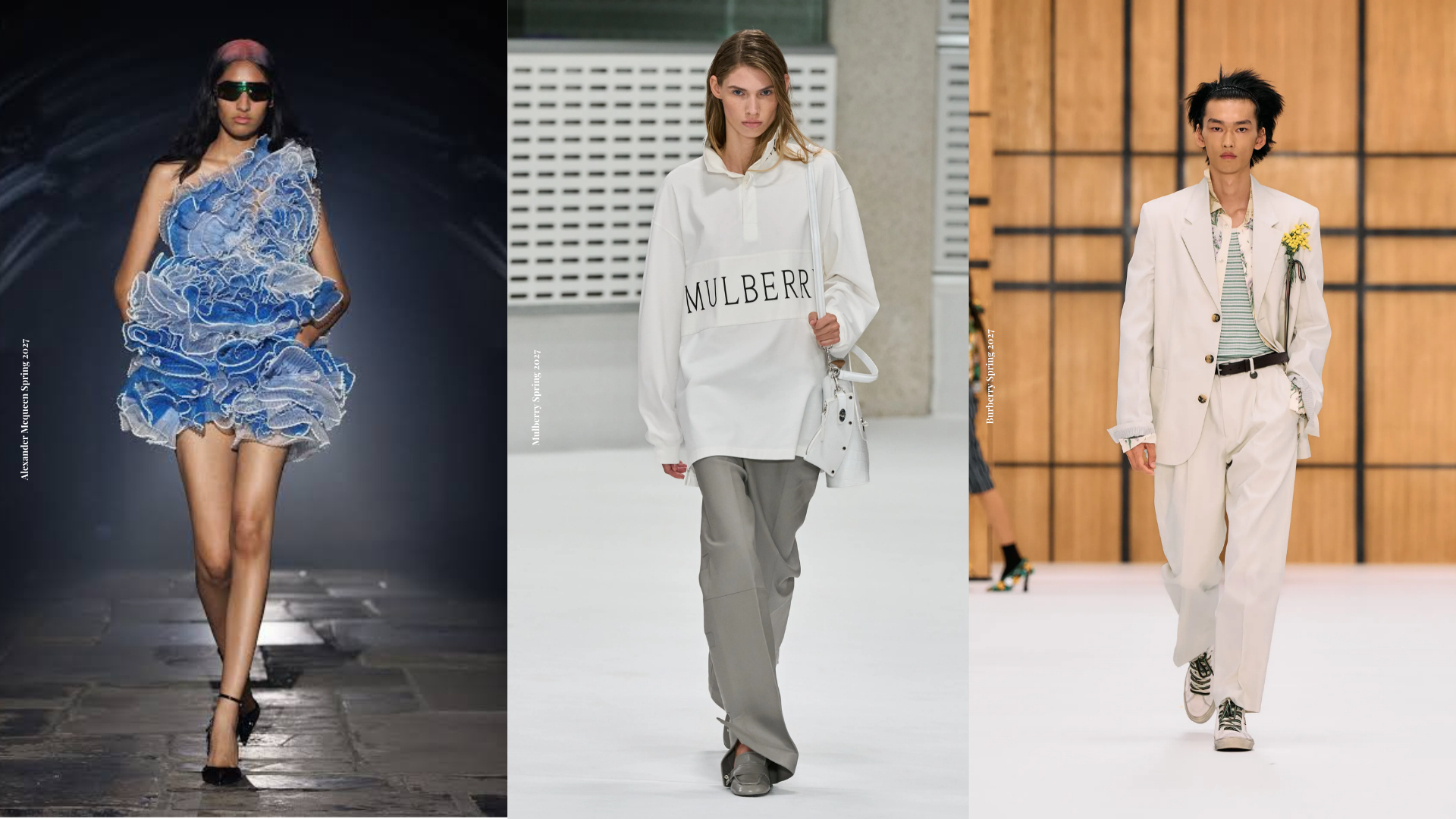
One of the week's biggest stories was the return of McQueen to London Fashion Week for the first time since 2001. Creative director Seán McGirr presented a collection drawing on London's rave culture and his own youth, while incorporating elements of traditional tailoring through a collaboration with Savile Row's Huntsman.
Christopher Kane also made his debut at Mulberry, bringing a new creative chapter to one of Britain's most recognizable leather-goods houses. His Spring/Summer 2027 collection revisited Mulberry's heritage through its leather craftsmanship and iconic Bayswater codes while introducing new silhouettes and hardware-inspired details. It marked Mulberry's return to the runway after nearly a decade.
Burberry closed the week with a distinctly British collaboration between Daniel Lee and textile designer Celia Birtwell. Birtwell's hand-painted prints were incorporated into Burberry's signature codes, including its check, while Central Cee joined a high-profile front row.
M&S Makes Its Runway Debut
Perhaps the most unexpected addition to the official schedule came from Marks & Spencer. Celebrating 100 years of fashion, the British retailer staged its first-ever London Fashion Week Fall 2026 presentation at the Design Museum on September 18.
The show featured 59 womenswear and menswear looks inspired in part by the M&S archive, from tailoring and knitwear to floral prints and the brand's recognizable white shirt and twinset. Unlike the traditional runway model of presenting a collection months before it reaches consumers, M&S made the complete collection available to purchase immediately following the show, with half of the collection priced below £50.
The move offered an interesting collision between high-street retail and Fashion Week — bringing the immediacy and spectacle traditionally associated with luxury fashion into a mass-market business.
Independent Designers Keep London Experimental
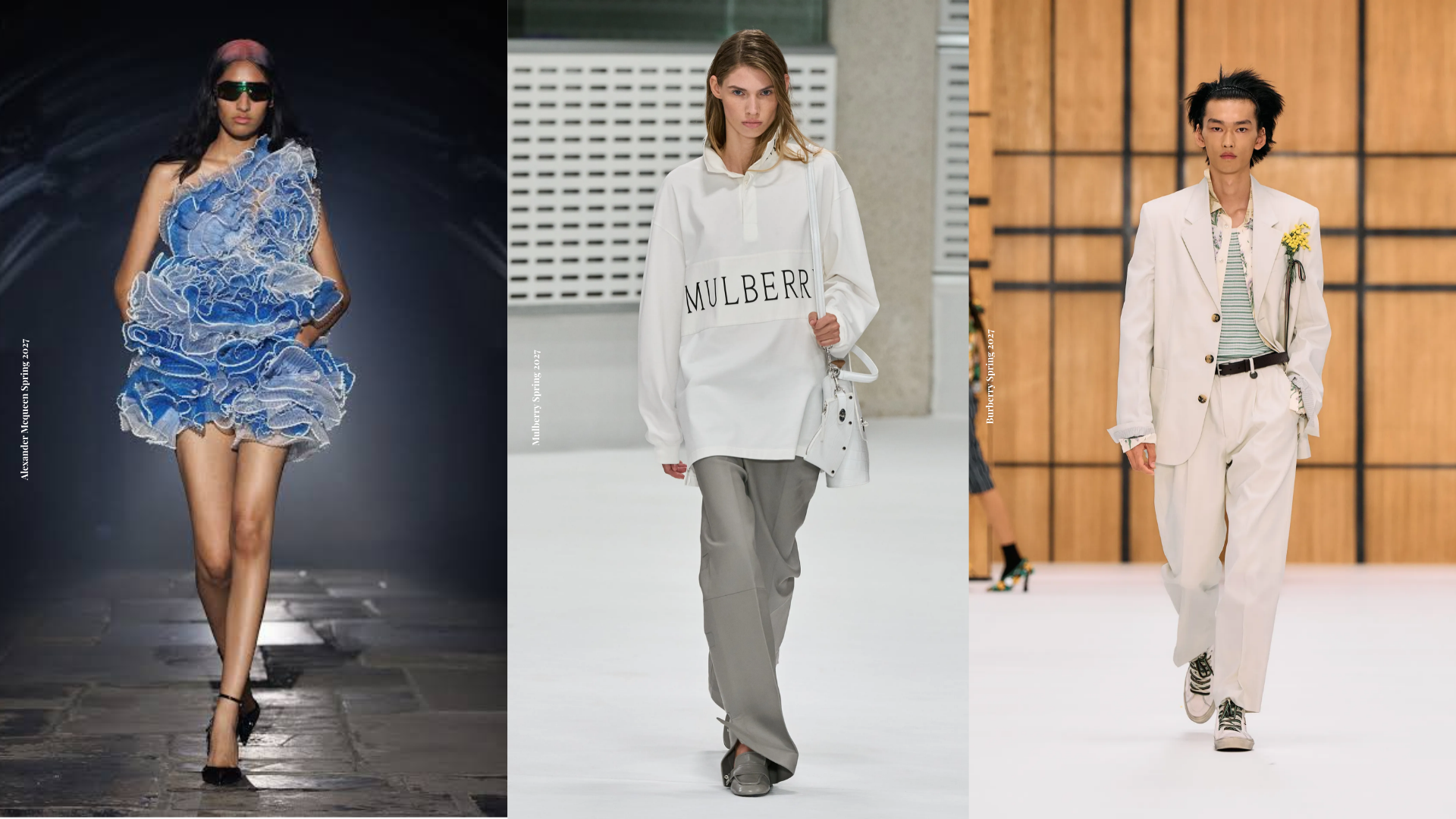
London's independent designers continued to supply much of the city's creative character. Erdem presented a collection inspired by Barbette, the celebrated trapeze performer of the 1920s and '30s, exploring the space between femininity and masculinity through eveningwear, tailoring and romantic silhouettes.
Harris Reed took a notably different approach. His Spring/Summer 2027 presentation was almost entirely white, creating what the designer described as a "ghostly" collection, while his signature corsetry and sculptural construction remained present. The salon-style presentation also placed greater emphasis on his luxury customer and the business surrounding the brand.
Elsewhere, designers including Chopova Lowena, Simone Rocha, Ahluwalia, Knwls, Talia Byre and emerging Fashion East and BFC NEWGEN names reinforced London's reputation for experimentation. Across the week, there was also a noticeable movement toward clothing that felt more commercially viable without abandoning distinctive creative identities.
Fashion, Retail and Circularity
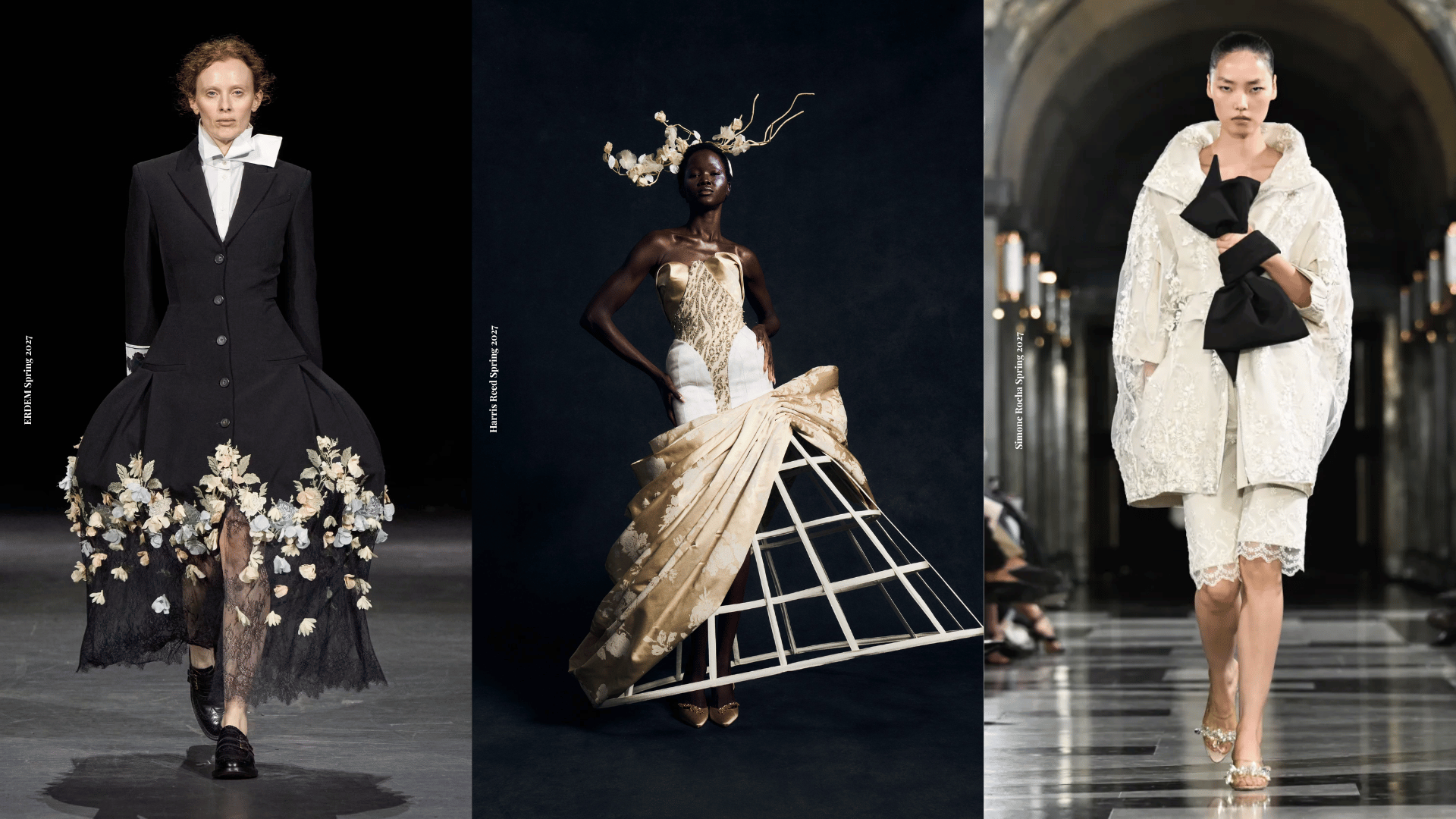
London also continued to broaden the definition of what a Fashion Week presentation can be. eBay returned with its Endless Runway, bringing pre-loved designer fashion into the official LFW conversation through a shoppable format. The initiative spotlighted archival and pre-loved pieces, including work associated with designers such as J.W. Anderson, Christopher Kane and Simone Rocha.
The concept that was launched in 2024 feels particularly relevant within London's wider fashion ecosystem, where sustainability and circularity have become increasingly embedded in the industry's emerging talent infrastructure. The British Fashion Council has partnered with Copenhagen Fashion Week to introduce sustainability requirements into its BFC NEWGEN programme, making sustainability considerations part of eligibility for participating designers.
