
From Product to Powerhouse: How Brand Marketing Fuels Luxury & Prestige Beauty
Some beauty brands have the freedom to take bold, unconstrained approaches to marketing—but luxury and prestige operate by a different set of rules. In these categories, storytelling and narrative discipline are not optional; they are foundational. As the cost of performance marketing continues to climb, brands are being forced to move beyond simply spending more and instead rethink how, where, and why they show up across channels. Today’s audiences may have shorter attention spans, but they are more discerning than ever—seeking meaning, intimacy, and a sense of community in the brands they choose to invest in.
Last year, Charlotte Tilbury adopted a more sincere yet authoritative brand posture, reinforcing its leadership within the prestige beauty industry—particularly in the makeup category. The January 2025 “Legendary for a Reason” campaign celebrated the brand’s most iconic, globally recognized hero's or what the brand would call "Un-dupable" Viral Sensations' like it's 'Beauty Light Wand', 'Hollywood Flawless Filter', and the 'Airbrush Setting Spray'.
The timing was very strategic. As beauty consumers gravitate more toward dupe culture and lower-priced alternatives, Charlotte Tilbury responded not by competing on price—but by reinforcing legacy and product authority. While newer brands like MCoBeauty have introduced products and packaging that closely mirror Charlotte Tilbury’s visual codes—most notably with their "Flawless Glow Luminous Skin Filter" product positioned as an alternative to Tilbury's Hollywood Flawless Filter'. But the campaign further solidified the conversation around originality, formulation integrity, and craftsmanship.
At a prestige price point, Charlotte Tilbury is not simply selling glow—it is selling 33+ years of artistry, innovation, and category-defining expertise in that bottle. “Legendary for a Reason” doesn’t just market bestsellers; it fortifies brand equity, reasserts makeup category leadership and makes a clear distinction between cultural imitation and authentic luxury authority. In doing so, the campaign decisively positions Charlotte Tilbury as irreplaceable—not replicable—within the global beauty industry.
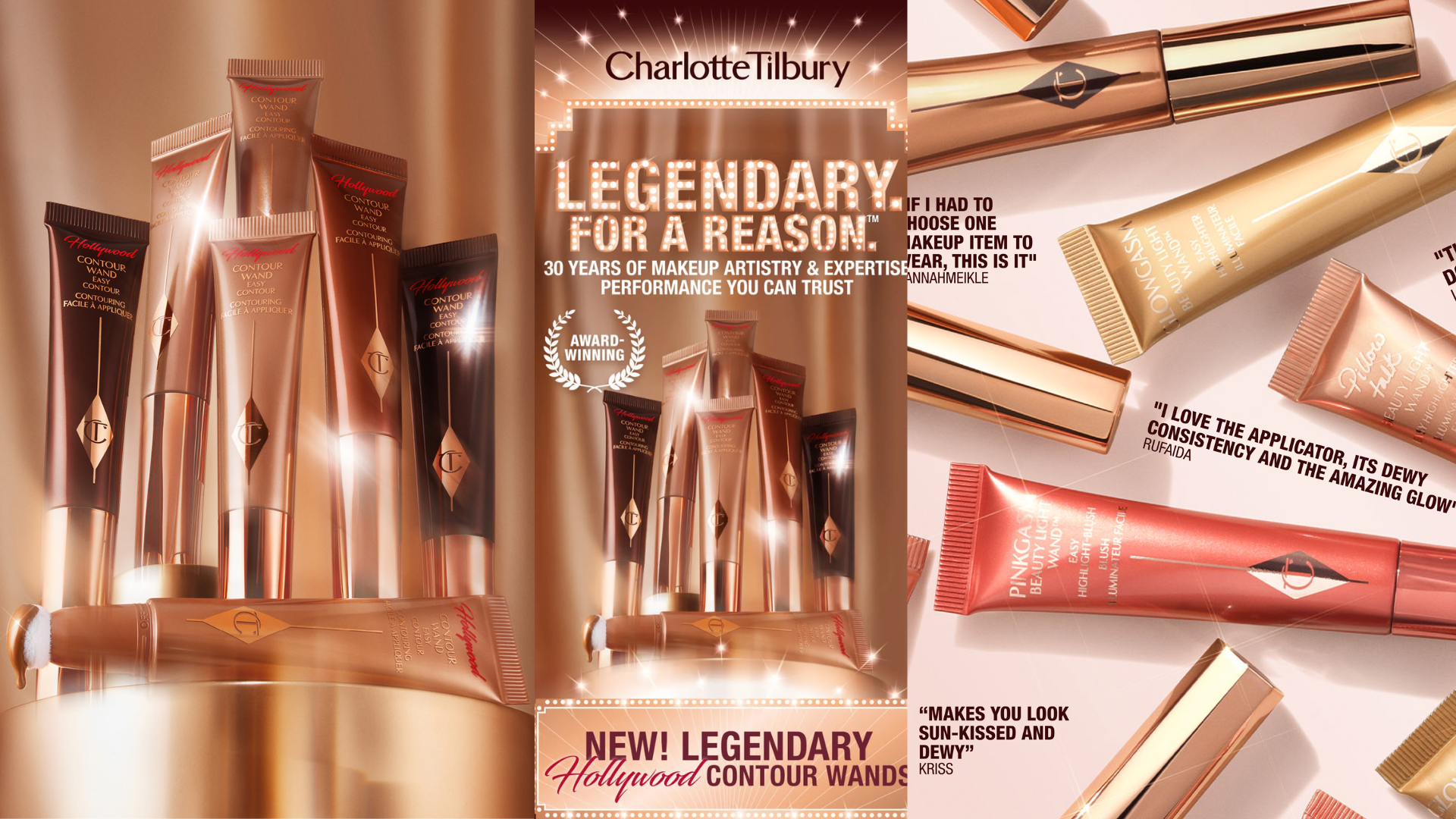
The heart of this campaign cuts through the noise and helps beauty consumers make confident, informed choices about where to invest through the power of brand marketing. This form of marketing has helped the brand be clear and confident in its positioning, legacy, and point of view, the brand allows its story to unfold organically—without relying on excessive theatrics in its creative delivery.
Brand Marketing's Impact in Luxury & Prestige Beauty
To counter rising performance marketing costs across digital advertising and paid media, brands have increasingly leaned on brand marketing to build stronger, more loyal audiences. This approach helps drive more organic growth around the brand while ultimately reducing customer acquisition costs (CAC).
Brand marketing, by nature, aligns seamlessly with luxury and prestige beauty. It is narrative-driven and aspirational, prioritizing long-term brand building over short-term tactics or one-off purchases. Rather than being purely product-centric, brand marketing emphasizes image, values, and personality—allowing brands to build more authentic, emotional relationships with their customers.
Pursuing this strategy as a luxury or prestige beauty brand requires cultivating desire. Too often, brands become overly focused on performance claims, science, and clinical studies, and in doing so, forget to emotionally connect with their audience. While education is valuable, it can become overly complex if it isn’t translated into the brand’s lifestyle, rituals, and real-world experiences.
Another important point is that this does not mean a brand eliminates performance marketing altogether. Performance marketing still delivers immediate, measurable results; however, its role should vary depending on the stage of the business given it's costs. Early and emerging growth brands with relatively lower marketing budgets should use it more selectively—primarily for awareness—while brands with established equity and legacy can rely and prioritize more performance brand-led growth. While performance marketing costs have risen significantly, brand marketing is also an investment, with strategic and creative costs that vary based on the brand’s level, goals, and overall objectives. The key is balance—using each approach intentionally rather than disproportionately.
As beauty consumers demand greater value from the products they invest in—and seek stronger justification around price and experience—brands must take a more authentic approach that makes consumers feel confident while delivering the results they expect. In this context, brand marketing becomes a more logical and effective way to appeal to both their needs and desires.

Key Considerations for Brand Marketing Initiatives:
Aspirational, Narrative-Driven Messaging: At higher price points, luxury and prestige beauty communications must reinforce the brand’s values, story, and personality—creating emotional resonance that extends beyond individual products. Legacy brands consistently excel at this approach. GIVENCHY Beauty, for example, communicates with a distinct sense of attitude that mirrors the house’s seasonal collections and enduring brand DNA, positioning beauty as an accessible entry point into the broader luxury portfolio while reinforcing the maison’s cultural codes. Similarly, many heritage houses activate brand marketing most effectively during holiday periods—like CHANEL fragrance campaigns- through exclusive scent profiles and storytelling integrated seamlessly across product formulation, packaging, retail environments, and digital touchpoints.
Purposeful Investment in Marketing Spend: Focus budgets on initiatives that build long-term brand equity rather than short-term conversions, balancing paid, earned, and owned channels strategically. Rather than running broad, high-volume ads that chase clicks, a luxury beauty brand might invest in a highly targeted digital campaign promoting a limited-edition product or exclusive experience. A brand like Christian Dior Couture or could run a small, highly curated Instagram and YouTube campaign highlighting a seasonal lipstick collection with storytelling around craftsmanship and heritage. The goal isn’t just immediate sales—it’s to reinforce brand prestige, cultivate desire, and drive organic conversations, all while carefully controlling spend to ensure each impression adds real brand equity.
Strategic Brand Management & Auditing: Engaging with a brand management partner enables continuous evaluation of brand performance through disciplined audits—making sure all initiatives remain aligned with brand identity, audience expectations, and long-term growth objectives, while integrating insights across product performance, sales, and customer behavior to drive results. The value of a key brand management partnership lies in its ability to deliver measurable insight without compromising the luxury and prestige of the brand, using audit-driven intelligence to refine marketing strategies, optimize investment, while building meaningful impact.
Organic Growth & Loyalty Building Prioritize initiatives that nurture authentic customer relationships, improve retention, and generate organic reach, making the brand experience feel personal and premium. Rather than launching a points-based loyalty program, a luxury or prestige beauty brand could invests in a clienteling-led CRM strategy that identifies its top 10% of customers by lifetime value. These clients receive early access to reformulated hero products, private virtual consultations with experts, and invitation-only previews tied to key cultural moments. The result is higher retention, increased replenishment rates, and organic advocacy—without discounting or overexposure.
Take the Next Step: Assess What’s Working—and What’s Limiting Growth
Identify which brand marketing campaigns are truly driving equity, loyalty, and commercial performance.
Evaluate alignment across product strategy, brand positioning, and business objectives.
Uncover gaps where spend, storytelling, or execution may be diluting impact.
Schedule a strategic consultation by submitting an inquiry and request a comprehensive brand health audit—designed to assess product, brand, and business performance holistically, ensuring every brand marketing initiative supports long-term growth without compromising luxury, prestige, or brand equity.
